Sunday, December 14, 2014


Linguistic Apartheid and the Quest for Freedom and Identity in Cameroon


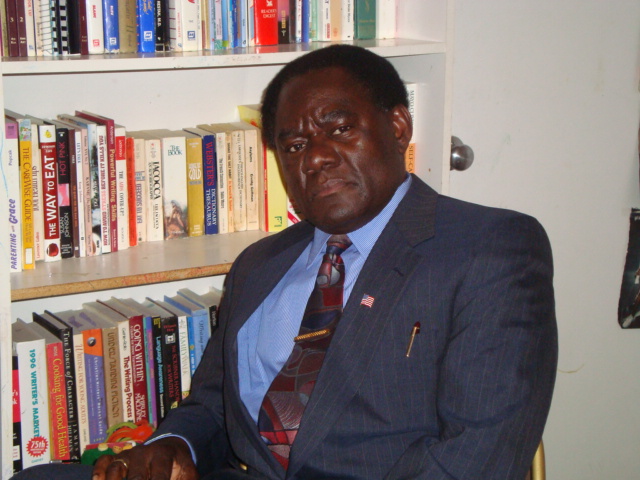
Peter  Wuteh Vakunta, PhD— University of Indianapolis, USA
 
 
Introduction

The language question in Cameroon has become the elephant in the room. Of all the burning issues that continue to plague Cameroon, the language question is the most problematic. This paper argues that Cameroon’s Official Bilingual Policy has fallen short of expectations.  We propose a Quadrilingual Language Policy that would lay the foundation for effective Multilingual Education that guarantees national unity and integration.  Our model incorporates Cameroonian official languages, indigenous languages and a lingua franca—in our case Cameroon Pidgin English (Cameroonian Creole). The merit of this MODEL is that it would normalize Cameroon’s linguistic anomalies. More than five decades after gaining token independence from imperial powers—France and Great Britain; Cameroon still does not have an implementable language policy that protects linguistic minorities.  Writing along similar lines, Ayafor (2005)notes that “language policy and planning suffer a political hijacking in which language measures are monopolized by political authority and are used as a form of blindfolding against the civil society and linguistic principles”(138).

 
This political bad faith violates Article 1:3 of Cameroon’s national Constitution which puts French and English at par. It states: “The official languages of the Republic of Cameroon shall be English and French, both languages having the same status. The State shall guarantee the promotion of bilingualism throughout the country. It shall endeavor to protect and promote national languages.” The fundamental flaw of this constitutional stipulation on official ‘bilingualism’ is that it fails to provide a clear working definition. It is not clear what level of linguistic proficiency must be attained by Cameroonian citizens in order to demonstrate officially sanctioned bilingualism.  Worse still, the constitution glosses over the dichotomy between individual and state bilingualism. In a linguistically pluralistic nation such as Cameroon, Bilingualism could mean anything from fluency in English and French; English and a national language; French and a national language; Pidgin English and a national  language; a national language and another national language, etc.  Besides, proficiency in any of these languages could vary from zero to near-perfection. It is in this perspective that Rosendal (2008) makes the following observation: “The extent of bilingualism in French and English in Cameroon is hard to estimate. Bilingual proficiency varies from zero to near perfect at the universities, depending on how semi-bilingualism, functional bilingualism and passive bilingualism are defined.” (25)  An interesting dimension of the discourse pertaining to official bilingualism in Cameroon is its correlation with biculturalism. Scholars such as (Echu, 2012; Tadadjeu, 1975; Fonlon, 1963, 1969) have pointed out that biculturalism is an integral component of official bilingualism. Sadly enough, official bilingualism in Cameroon has been treated with such levity that it has virtually been rendered dysfunctional. Jikong (1983) attributes the failed implementation of Cameroon’s official bilingualism to inadequate language planning. That’s why  Bobda and Tiomajou (1995) observe that “In Cameroon there is no government position on language policy and planning apart from the statement that French and English shall be the official languages of the Republic”(127).

 
To put this differently, Cameroon’s official bilingual policy has been presented as a mere statement of intent. According to Soule (2013), “the State is doing quite a lot to ensure the promotion of bilingualism, as stated in the Constitution, but is doing very little to ensure practical implementation of bilingualism”(13).There is no legislation on the practice of bilingualism in Cameroon. Consequently, Cameroonians who infringe the constitutional stipulation cited above cannot be held accountable because there is no institution charged with the implementation of the nation’s bilingual policy. Though strongly articulated in policy documents, Cameroon’s bilingual policy remains a mere manifesto on paper. In daily practice, French has dominance over the English language in the spheres of administration, education and the media.

The position of dominance accorded the French language is attributable to the absence of an effective language policy that safeguards the rights of linguistic minorities.  This status quo does not bode well for the nation’s quest for freedom and identity because as Echu (2004) would have it, “The Policy of official language bilingualism has created an Anglophone/Francophone divide in Cameroon that is seen in recent years to constitute a serious problem for the State” (6). Thus, though conceived to play the role of a unifying factor, Cameroon’s official language policy embodies germs of disunity.  The lackluster implementation of the nation’s language policy has been described by scholars as a harbinger of national disintegration (Soule, 2013; Echu, 2004; Ayafor, 2005; Tiomajou, 1991; Bobda and Tiomajou, 1995). Ayafor for instance, argues that “language has become one major factor among the socio-political grievances of Anglophones’ so-called ‘The Anglophone Problem’ since 1980s” (133).

 The ‘Anglophone Problem’ stems from the second fiddle status assigned to English-speaking Cameroonians by francophone members of government. This probably explains why in English-speaking towns and cities such as Bamenda, Buea, and Tiko, to name but a few, there are billboards and toll-gates with inscriptions written entirely in French. Rosendal (2008) notes that “bilingual policy implies that official documents and laws are published in both languages” (29). These examples lend credence to the fact that English remains a mere afterthought in the minds of government officials in Cameroon. In Cameroon official documents such as decrees and more are endorsed with an official seal and their content implemented without official versions in English. It is not uncommon to find English translations of important government documents fraught with mindboggling spelling and grammatical errors. These are pointers to the fact that the implementation of Cameroon’s official bilingualism has failed woefully.

There is no gainsaying the fact that what prevails in Cameroon today is tantamount to linguicide, a term used throughout this paper to describe the linguistic genocide that has been given leeway in Cameroon. Linguistic genocide is observable in all spheres of government business. In the judicial branch of government, the interpretation of the letter and spirit of the law is left to the whims and caprices of French-speaking judges who are ignorant of how the Anglo-Saxon legal system functions. This has resulted in countless miscarriages of justice. For instance, a travesty of justice was evident during the infamous Yondo Black trial[1] in the 1990s.
The National Radio and Television Corporation (CRTV) is another case in point. The preponderance of French news at the CRTV is no secret to anyone living in Cameroon. During electoral campaigns, little or no time is allotted to the campaign speeches of Anglophone opposition leaders desirous of addressing the nation in a bid to sell their political platforms. The language of instruction and daily routine in Cameroon’s armed forces, police and gendarmerie [2]is French. Anglophones recruited to serve in these forces have to fight or flee; in other words, they must learn French or perish.

Such is the crux of the Anglophone Problem in Cameroon. To eradicate these policy bloopers and save Cameroon from linguistic disintegration, this paper proposes a Quadrilingual Education System that is linguistically inclusive. Our model is calqued on previous models proposed by two of Cameroon’s most acclaimed experts in the field of early childhood second language acquisition, namely Bernard Fonlon (1963) and Maurice Tadadjeu (1975).

A Quadrilingual Educational Model in Cameroon

The Model that we propose is anchored on the acquisition of four (4) languages: English, French, a National Language and a Lingua Franca (CPE) before the Cameroonian child gets to University. We argue that a quadrilingual education model that gives pride of place to the acquisition of both official and national languages serves as a catalyst for the attainment of national unity and economic advancement; the more so because language constitutes the bedrock of nationhood and self-identity.  

In our conceptualization of the Quadrilingual Model we have espoused the  stance of Tadajeu (1975) who argues that “if language is to be the primary concern of the primary school then there is no reason for not including the vernacular languages in the curriculum at this level”(58). Tadajeu actually echoes Fonlon’s thoughts on this theme: “I must confess that the expression Cameroon bilingualism is a misnomer. It would be correct to speak of Cameroon trilingualism because even before the Cameroon child comes to school to learn English and French, he should have already learnt his own native tongue” (“A Case for Early Bilingualism…,”p.206).  Other scholars in this field have argued for the inclusion of indigenous languages in the educational system in Cameroon (Mba and Chiatoh, 2000; Todd, 1983; Chumbo, 1980; Ngijol, 1964; Achimbe, 2006). Achimbe argues that the language education policy in Cameroon largely ignores the importance of national languages. As he puts it: “In promoting its bilingual language education policy, the government has largely disregarded the multilingual make-up of the country. Indigenous languages play only a secondary role…” (96).
Similarly, Tadadjeu advocates the inclusion of national languages in the education system in Cameroon in his trilingual Education Model. The Quadrilingual Model proposed in this paper envisages the inclusion of a lingua franca (Cameroon Pidgin English) for several reasons.

Lingua Franca as Component of the Quadrilingual Model

The rationale for including CPE in our model is three-fold. First, the number of households in Cameroon where Pidgin English is the primary language of communication is on the increase. Just as French and English are mother tongues for the majority of urban kids today, Pidgin English has supplanted these hegemonic languages in many homes, especially in instances of mixed marriages between Francophone and Anglophone Cameroonians. Second, Pidgin English is the only language spoken by over 85% of Cameroonians. According to Achimbe (2006), Pidgin English acquired a national character, “representing the mother tongue of fifty percent of the population” (99). He further notes that Cameroon Pidgin English (CPE) is fast becoming the mother tongue in some urban communities. Breton and Fohtung (1991) buttress this point when they refer to Pidgin English as a language of “wider communication in Cameroon” (12).  Mbangwana (1983) lends credence to the importance of Pidgin English as a lingua franca in Cameroon as follows:

Pidgin English is very crucial as a communication bridge, for it links an Anglophone to a Francophone. It also links an Anglophone to another Anglophone, an educated Cameroonian to another educated one, a non-educated Cameroonian to another non-educated one, and more importantly an educated Cameroonian to a non-educated one(87).

Ayafor (2005) recognizes the importance of lingua franca in language planning in Cameroon when he underscores “the role of Pidgin English as a linguistic bridge between the two linguistic communities both in official and private domains” (128). He further notes that Pidgin English in not only the most widespread variety of English but it is the only language in Cameroon with the pragmatic ability to function as a contact language for all linguistic groups.

The third reason for incorporating Pidgin English into the Quadrilingual Model is that Pidgin English is no longer just a language of the streets. It has evolved into a medium of literary expression. Cameroonians are now producing works of literature in Pidgin English. A few examples would drive home the point:  Majunga Tok: Poems in Pidgin English(2008), CamTok and Other Poems from the Cradle (2010), African Time and Pidgin Verses(2001) Stories from Abakwa (2008), Je parle camerounais (2001), Moi taximan (2001)and Temps de chien (2001).
What we would like to do at this juncture is provide a succinct description of the Quadrilingual Model.

A Blueprint for Quadrilingualism in Cameroon

In our conception of a Quadrilingual Education System in Cameroon,  we have made a clear distinction between a first official language(O1), which is the medium of instruction and the second official language(O2) which is a subject to be learned at school.  At the same time, we have underscored the dichotomy between a national language (indigenous language) and a lingua franca (hybrid language used as a means of communication among speakers of other languages).  

The long-term objective of the Quadrilingual Education System would be to prepare Cameroonian learners linguistically for university studies.  The ideal would be to see each Cameroonian child literate and fluent in their mother tongue or a related regional language, the two official languages as well as a lingua franca as they work their way toward university studies. To be labelled fluent, the individual must be able to function at level 3 of the Inter-Agency Language Roundtable Scale of Descriptors.[3]

 The Quadrilingual Blueprint

§  Primary School Level
At the primary school level, the mother tongue should be the medium of instruction and the first official language (English for Anglophones and French for Francophones) would be a curricular subject. This stipulation would apply to both rural and urban schools. A proportionate number of indigenous language teachers will have to be trained in order to see this project through.

§  Secondary School Level
At secondary school level, a gradual switch would be made to the learner’s first official language (English for Anglophones and French for Francophones) as a medium of instruction. The mother tongue, lingua franca and second official language (French for Anglophones and English for Francophones) should become curricular subjects. This model ensures that learners are exposed to three languages before they get to High School.  By the end of secondary school, the Cameroonian child should be Quadrilingual in the strict sense of the word as it is used in this paper.

§  High School Level
At high school level German, Spanish, and Latin courses should be replaced by courses in Cameroonian indigenous languages.  Also, some language majors would be encouraged to participate in indigenous language literacy programs. No specific modifications are anticipated at this level as regards the teaching of French and English, except where instructional pedagogies are concerned.

§  University Level
At university level two things could occur.

                                 i.   The extension of current indigenous language courses in a bid to transform them into inter-lingual translation courses covering all national languages as well as Pidgin English.  Program designers and coordinators could conceive incentives that would encourage a greater number of students to sign up for languages related to their own mother tongues if there are no courses in their mother tongues.

                               ii.     Students with linguistics as minors or majors could be encouraged to take indigenous language literacy courses that would enrich their mastery of the phonology, morphology and syntax of indigenous languages.

 Conclusion

This paper has unearthed the root causes of the bilingual policy abortion in Cameroon. Incontrovertible evidence has been unraveled to lend credence to the contention that Cameroon’s language policy is a non-starter and has, therefore, failed to serve as guarantor of national unity and territorial integration. To fill this lacuna, this paper has proposed a Quadrilingual Blueprint that is inclusive of Cameroonian national languages and Pidgin English. The merit of this paper resides in its broadening of the scope of the national language policy discourse in Cameroon by arguing for the inclusion of indigenous languages and Pidgin English. Most importantly, it has made the point that national language policy decisions ought to be made on the basis of sound pedagogic principles rather than on the whims and caprices of uninformed political role-players.

Works cited

Achimbe, Eric A. “Anglophonism and Francophonism: The Stakes of (official) Language Identity in  Cameroon.” Alizés: Revue angliciste de la réunion 25/26(2006): 7-26.

Amvela, Zé. “English and French in Cameroon: A Study in Language Maintenance and Shift.” In Echu G. and Grunstrom, W.A. (eds.) Official Bilingualism and linguistic Communication in Cameroon.  New York: Peter Lang, 1999.

 Ayafor, Isaiah, Munang. “Official Bilingualism in Cameroon: Instrumental or Integrative
Policy?’ Proceedings of the 4th International Symposium on Bilingualism. Ed. James
Cohen et al., Somerville: Cascadilla Press, 2005.

 
Bobda, S. and Tiomajou, D. “Integrating ESL and EFL: The Cameroonian Experience,” In British

                Council, Senegal. Across  the West African Divide. Proceedings of the West African English  Language Conference, Mbour, Senegal, 1995.

 
Breton, Roland and Fohtung, Bikia.  Atlas administratif des langues nationales du Cameroun.

                Yaoundé, Paris: CERDOTOLA, CREA – ACCT, 1991.

 
Cameroon, Government. Constitution of the Republic of Cameroon. Yaoundé: Government

                printer, 1996.

 Chumbo, B.S. “Language and Language Policy in Cameroon,” In Kofele Kale (ed.) An Experiment in  Nation-Building: The Bilingual Cameroon Republic since Reunification. Boulder: Westview

                Press, 1980.

Chumbo,  B.S.  and  Pius Tamanji. “Linguistic Identity across the Borders of Cameroon Triangle,” In Kweshi K. Prah (ed.) (2000):53-74.

 
Echu, George. “Influence of Cameroon Pidgin English on the English and

                Cultural Development of the French Language” (1991). Retrieved on

                March 12, 2014 from https://www.indiana.edu/~iulcwp/pdfs/03-

                echu03.pdf

 _______________. “Pidginization of French in Cameroon” (2006). Retrieved on

                February 12, 2014 from

                http://www.inst.at/trans/16Nr/01_5/echu16.htm


_______________. “The Language Question in Cameroon.”(2004). Retrieved

                January 13, 2012 from http://www.linguistik-

                online.de/18_04/echu.html

 
_________________. “Influence of Cameroon Pidgin on the Linguistic and Cultural Development

                of the French Language,” Retrieved on April 23, 2013 from


Echu, G. and Grundstrom, A.W. Official Bilingualism in Cameroon: Francophone Cultures and 

                Literatures . New York. Peter Lang, 1999.

 
Fonlon, Bernard. “The Linguistic Problem in Cameroon: An Historical Perspective,” ABBIA 22

                (1969):5-50

____________________. “A Case for Early Bilingualism,” ABBIA 4

                (1963):56-94


Fouda, Mercédès. Je parle camerounais: pour un renouveau francofaune.Paris:

                Karthala, 2001.

 
Hirsch, E.D. Cultural Literacy: What Every American Should Know.  New York: Vintages Books,1988.

 
Jikong, S.Y. “Official Bilinguallism in Cameroon: A Double-Edged Sword,” Alizés:  Revue angliciste de la réunion 19(2001): 7-26

 
Kouega, J.P. (2003): “Camfranglais: A Novel Slang in Cameroon Schools,”

                English Today 19-2(2003): 23-29.

 
Kuitche, F. Gabriel. Moi taximan. Paris: L’Harmattan, 2001.

 
Mba G. and Blasius Chiatoh. (2000). "Current trends and Perspectives in Mother Tongue Education in Cameroon,'' African Journal in Applied Linguistics (AJAL) No. 1 (2000) 1-2.


Mbangwana, P. “Flexibility in Lexical Usage in Cameroon English,” Retrieved December 12, 2012

                from d_praqz5Z4#v=onepage&q=%E2%80%9C%20mbangwana&f=false

 
_____________________. Mbangwana, P.N.  “Invigorative and Hermetic Innovations in English in

                Yaounde.” World Engishes 10.1(1991):53-63.

 
Nganang, P. Temps de chien. Paris:  Serpent à Plumes, 2001.

 
Ngijol, Pierre. "Nécessité d'une langue nationale,"ABBIA No. 7 (1964): 83-99.

 
Nyamnjoh Francis. Stories from Abakwa. Bamenda: Langaa Research and

                Publishing Common Initiative Group, 2007.

 
Rosendal, Rove. Multilingual Cameroon: Policy, Practice, Problems and Solutions.

                Gothenburg: University of Gothenburg Press, 2008.

 
Soule, S N. “Official Bilingualism in Cameroon: Farce or Reality? The Need for Texts to Govern the   Practice of Official Bilingualism in Cameroon,” Retrieved on October 2, 2014 from

                https://www.google.com/?gws_rd=ssl#q=official bilingualism in cameroon: farce or

                reality%3f the need for texts to govern the practice of official bilingualism in cameroon

 Tadadjeu, M. “Language Planning in Cameroon: Toward a Trilingual Education System.” In Patterns in Language, Culture and Society: Sub-Saharan Africa. Ohio:  University of Ohio Press, 1975.

Tiomjou, D. Bilingualism in the Mass Media in Cameroon:  A Sociolinguistic Analysis of Cameroon

                Radio Television. (Unpublished Dissertation). Yaounde: University of Yaounde.

 
Todd, Loreto. "Language Options for Education in a Multilingual Society: Cameroon."In Kennedy, Chris (ed.): Language Planning and Language Education. London, 1983.


 Vakunta, P.W. Majunga Tok: Poems in Pidgin English. Bamenda: Langaa

                RPCIG, 2008.

_________________________. African Time and Pidgin Verses, Pretoria, Duplico,

                2001.

__________________________. Cam Tok and Other Poems from the Cradle. Bamenda: Langaa RPCIG, 2010.

Wolf, H.G. English in Cameroon: Contributions to the Sociology of Language. Berlin: Mouton de

                Grutyer, 2001.

 Notes


[1] On April 4, 1990, the Yaounde military tribunal was the focus of national and international attention as arguments in the trial of Yondo Black Mandengue and 10 others began. They had been arrested in February of that year for trying to create a political party. Officially, however, the accused were charged with holding clandestine meetings, fabricating and distributing tracts hostile to the Government, rebellion, and insulting the Head of State.
[2]  Police officers in francophone countries
[3] The following ILR descriptions of proficiency levels 0, 1, 2, 3, 4, and 5 characterize spoken-language use. Each higher level implies control of the previous level’s functions and accuracy. A skill level is assigned to a person through an authorized language examination called the  Oral Proficiency Interview(OPI). Examiners assign a level on a variety of performance criteria exemplified in the descriptive statements.
 

Monday, June 3, 2013


The Task of the Cameroonian Intellectual

By Peter Vakunta, PhD

At a time when the Republic of Cameroon is squirming under the pangs of misgovernment, bastardization of political power, lethal tribalism, and endemic corruption, it is germane to pose the following thorny questions: what does it mean to be an intellectual in Cameroon today? Are Cameroonian intellectuals merely servants of special interest groups or do they have a greater social responsibility?  As I see it, the Cameroonian intellectual has the choice either to side with the downtrodden and marginalized or with the powerful. Without fear or favor, the genuine intellectual has to have the courage to blow the whistle on blatant human rights violations. Most importantly, the intellectual must have the forum in which to talk back to authority, the more so because unquestioning subservience to authority in Cameroon and elsewhere in contemporary society is tantamount to a threat to an active and sane intellectual life.  In this essay, we will endeavor to address these issues as eloquently as possible.
Celebrated literary and cultural critic, Edward Said, sees the intellectual as a  scholar whose role it is to speak the truth to power even at the risk of ostracism, imprisonment or death: “Real intellectuals…are supposed to risk being burned at the stake, ostracized, or crucified”(7). Thinking along the same lines, Jacoby (1987) defines the intellectual as “an incorrigibly independent soul answering to no one” (quoted in Said, 72).  Both Said and Jacoby agree that the intellectual is supposed to be heard from, and in practice ought to be stirring up debate and if possible controversy.
In light of the status quo in Cameroon under the presidency of Mr. Paul Biya, it behooves the intellectual to speak the truth, ruffle feathers and rock the boat without caring whose ox is gored.  We must caution that speaking the truth to authority should not be construed as some sort of Panglossian[i] idealism. Speaking the truth to the powers-that-be amounts to carefully weighing the options, picking and choosing the right one, and then sagaciously articulating it where it can do the most good and trigger desired change. The Cameroonian intellectual’s voice may be lonely, it nonetheless, has resonance because it associates itself the aspirations of a people, the common pursuit of a shared ideal—the Summum Bonum.

Said observes that “the hardest aspect of being an intellectual is to represent what you profess through your work and interventions, without hardening into an institution or a kind of automaton acting at the behest of a system…”(121). He further notes that the intellectual who claims to write only for himself or herself, or for the sake of pure learning , or abstract science is not be, and must not be believed. To my mind, nothing is more reprehensible than the intellectual frame of mind that induces avoidance, the turning away from a principled position which you know to be the right one, but which you decide not to take. You shy away from appearing politically ‘incorrect’; you are scared of seeming untowardly polemical because someday you hope to earn a big prize, perhaps even a ministerial appointment or ambassadorship in your home government. In the eyes of a bona fide intellectual, these habits are corrosive par excellence. If anything can denature and neutralize an intellectual it is the internalization of such nefarious habits.

Personally, I have encountered these corrupting habits in one of the toughest unresolved problems plaguing the wellbeing of Cameroonian polity—the Anglophone Problem, where fear of speaking out about one of the thorniest national questions in Cameroonian history has hobbled, blinkered and muzzled many who know the truth and are in a position to serve it.  The Cameroon Anglophone Problem manifests itself in the form of vociferous complaints from English-speaking Cameroonians about the absence of transparency and accountability in state affairs, in matters relating to appointments in the civil service, the military, the police force, the gendarmerie and the judiciary.
In short, the Anglophone Problem raises questions about participation in decision-making as well as power-sharing in a country that prides itself on being Africa in miniature. The Anglophone Problem is the cry of the disenchanted, the socially ostracized and the oppressed people of Cameroon. Anglophone Cameroonians incessantly lament over the ultra-centralization of political power in the hands of a rapacious Francophone oligarchy based in Yaoundé, the nation’s capital, where the Anglophone with limited proficiency in the French language is made to go through all kinds of torture in the hands of supercilious-cum benighted Francophone bureaucrats who look down on anyone speaking English. [ii] Richard Joseph talks of “the neutralization of Anglophone Cameroon” on page 82 of his seminal work, Gaullist Africa: Cameroon under Ahmadu Ahidjo (1978).

Despite the abuse and vilification to which outspoken advocates of self-determination for Anglophone Cameroon may be subjected, the truth deserves to be spoken, represented by an unafraid and compassionate intellectual. The Cameroonian intellectual need not climb a mountain or rooftop in a bid to declaim.  The genuine intellectual must speak his or her mind quietly and clearly where they can be heard. Most importantly, they should present their views in such a manner as to drum up enough support for an ongoing process, for instance, the cause of justice for marginalized Anglophone Cameroonians.  Informed Cameroonians know that the statutes and constitutional stipulations on official bilingualism in Cameroon, for instance, is a sham. Arguing along similar lines, Ayafor posits: “There has been unrelenting efforts and frustration at the fact that language policy has not contributed to national integration through linguistic fusion” (2005, 140). Unlike most other African countries which give pride of place to indigenous languages, French and English, languages of predatory imperialists, remain official languages in Cameroon in stark contradiction of the national constitution which stipulates: ‘The State shall guarantee the promotion of bilingualism throughout the country. It shall endeavor to protect and promote national languages (Article 1.3: 5).

No intellectual can speak up at all times on every single issue plaguing national life. But, there is a compelling duty to address the constituted and authorized powers of one’s own country, which are accountable to citizenry, especially when those powers are exercised in a manifestly abusive, arbitrary, and disproportionate manner. For the Cameroonian intellectual, there is no sitting on the fence; there a reality to be faced, namely that Cameroon is an extremely diverse nation with over 236 indigenous languages and cultures, an abundance of natural resources and accomplishments, but it also harbors a redoubtable set of internal inequities and inequalities that cannot be ignored, not the least of which are unsound regional development paradigms and human rights abuses. Cameroon is a signatory to the Universal Declaration of Human Rights, adopted and proclaimed in 1948, reaffirmed by every new member state of the UN. Cameroon is also a signatory to solemn international conventions on the treatment of workers, women, and children. None of these documents says anything about less equal ethnic groups, tribes or peoples.   The aforementioned instruments stipulate that all human beings are entitled to the same freedoms. Of course, these rights are callously violated on a daily basis in Cameroon. Joseph decries human rights abuses and oppression in Cameroon as follows: “Not only has the political system been devised to deprive the citizen of any real say in the choice of his governors, he has also been divested of any control over their actions…confronted with concerted abuse by agents of state… the people of Cameroon are legally powerless”(115).
Faced with this state of affairs, the onus rests with the Cameroonian intellectual to raise moral questions as they involve one’s homeland, its power, and its mode of interacting with its citizens.  This does not mean opposition for opposition’s sake. What it means is asking questions, making distinctions, and committing to memory all those issues that we tend to gloss over in our rush to collective judgment. Arguing along similar lines, Said maintains: “The intellectual today ought to be an amateur, someone who considers that to be a thinking and concerned member of a society one is entitled to raise moral issues at the heart of even the most technical and professionalized activity as it involves one’s country…”(82). There has been a  lot of idle talk lately about something called ‘political correctness,’ which Said qualifies as “an insidious phrase applied to academic humanists, who, it is frequently said, do not think independently but rather according to norms established by a cabal of leftists…”(77). The caveat is that blind adherence to this dogma is likely to curtail individual and collective freedoms.  The corollary is that the intellectual does not represent an inviolate icon but a personal vocation with a slew of issues, all of them having to do with a hybrid of emancipation and civil rights issues.

In a nutshell, intellectualism in Cameroon should be deemed fundamental to the attainment of knowledge and basic freedoms. Yet, these constructs acquire meaningful interpretation, not as abstractions but as experiences actually lived by the individual intellectual. This is true of intellectuals in Cameroon as it is of intellectuals elsewhere.  Thus, the fundamental task of the Cameroonian intellectual is explicitly to rationalize local problems,  universalize national crises, assign greater scope to the sufferings of his or her people, and last but not least, to associate those experiences with the suffering of underprivileged global citizens. This does not imply being an arm-chair critic of the home government at all times, but rather of thinking of the intellectual vocation as maintaining a state of constant alertness, of a perpetual willingness to not let half-truths blind us from seeing reality through a broad prism.

Notes


[i] Person who views a situation with unwarranted optimism. [cf. Dr Pangloss , a character in Voltaire's Candide (1759)]


Works cited
 
Ayafor, Isaiah, Munang. “Official Bilingualism in Cameroon: Instrumental of
Integrative Policy?” In Proceedings of the 4th International Symposium
on Bilingualism.Ed. James Cohen et al., Somerville: Cascadilla Press, 2005.
 
Cameroon, Government. Constitution of the Republic of Cameroon. Yaoundé.
Government printer, 1996.
 
 
Jacoby, Russel. The Last Intellectuals: American Culture in the Age of Academe.
New York: Basic Books, 1987.
 
Joseph, Richard. Gaullist Africa: Cameroon under Ahmadu Ahidjo. Enugu:
Fourth Dimension Publishers, 1978.
 
Said, W.  Edward.  Representations of the Intellectual. New York: Vintage
Books, 1994.
 
Vakunta, P.W. Cry my Beloved Africa: Essays on the Postcolonial Aura in
Africa: Bamenda: Langaa, 2008.
 
Voltaire. Candide. Paris: Haitier, 1986.
 
About the Author
Professor Vakunta teaches at the United States Department of Defense  Language Institute, POM-CA

Friday, March 15, 2013


Dissent as a Higher Form of Patriotism: Reflections


Peter Wuteh Vakunta, Ph.D


 Many of us who pontificate about the dissonance between dissent and patriotism remain oblivious to the fact that these are actually very loaded terms. It is a slippery route to walk when we obstinately cling to the antiquated idea that any intellectual or scholar who takes his/her country to task is ipso facto placing himself/herself in the camp of the unpatriotic. One of the most celebrated  intellectuals of our time, Edward Said, argues in his seminal book Representations of the Intellectual (1994) that “One of the shabbiest of all intellectual gambits is to pontificate about abuses in someone else’s society and to excuse exactly the same practices in one’s own” (cited in Chomsky, The Common Good, 102).  Closer home, Cameroonian scholar Bernard Nsokika Fonlon (cf. Genuine Intellectuals: Academic and Social Responsibilities of Universities, 2009) subscribes to Said’s worldview. Arguing along the same lines, celebrated Nigerian novelist, Chinua Achebe contends that one common feature of underdeveloped nations is the tendency among the ruling elite to live in a world of make-believe with regard to matters pertaining to patriotism. He remains adamant that "spurious patriotism is one of the hallmarks of Nigeria's privileged classes whose generally unearned positions of sudden power and wealth must seem unreal even to themselves"(35). Achebe's definition of a true ‘patriot’ is one "who will always demand the highest standards of his country and accept nothing but the best from his people. He will be outspoken in condemnation of their shortcomings without giving way to superiority, despair or cynicism." (35)


In the second quarter of the nineteenth century a Russian aristocrat named Peter Chaadayev was portrayed as insane by order of Czar Nicholas I for publicly describing his country as a backward nation caught up in a narrow and boastful nationalism. Chaadayev subsequently defended his patriotism—and the views which had incurred the Czar’s displeasure—in an essay entitled “Apology of a Madman” (1837). “Believe me,” he wrote in the concluding paragraph of the essay,

I cherish my country more than any of you… But it is also true that the patriotic feeling which animates me is not exactly the same as the one whose shouts have upset my quiet existence… I have not learned to love my country with my eyes closed, my head bowed, and my mouth shut. I think that one can be useful to one’s country only if one sees it clearly; I believe that the age of blind love has passed, and that nowadays one owes one’s country the truth. I confess that I do not feel that smug patriotism, that lazy patriotism, which manages to make everything beautiful, which falls asleep on its illusions and with which unfortunately many of our good souls are afflicted today (cited in Giffin and Smith, 1971, p.316)


In the essay that follows, I deplore what I regard as a growing tendency among Cameroonians to equate expression of dissent with lack of patriotism.  I insist that to criticize one’s country is in itself an act of patriotism. To criticize Cameroon is to do it a service and pay it a compliment. It is service because it may spur the country’s leaders to perform better than it is doing; it is a compliment because it evidences a belief that the country can do better. In a genuine democracy, dissent is an act of faith; it creates room for checks and balances. Like medication, the test of its efficacy does not reside in its taste but in its effects. The test of its value is not how it makes people feel at the moment, but how it inspires them to act together in the long term.  Criticism may embarrass the folks at the helm in Cameroon in the short run but it will strengthen their hands in the long run; it may destroy a consensus on policy while expressing a consensus of values. There lies the ambivalence of the term ‘patriotism.’ Woodrow Wilson once said that there was “such a thing as being too proud to fight;”[i] there is also, or ought to be, such a thing as being too confident to conform, too strong to be silent in the face of apparent error. In sum, criticism is more than a right; it is an act of patriotism, a higher form of patriotism that may elude the feeble-minded. Criticism connotes a higher degree of patriotism than the familiar rituals of national adulation.


I may shock some of my readers by insisting that it is not a pejorative term but a tribute to say that Cameroon is worthy of criticism. Nonetheless, if I am charged with lack of patriotism on account of my conviction, I would respond with words borrowed from Albert Camus: “No, I didn’t love my country, if pointing out what is unjust in what we love amounts to not loving, if insisting that what we love should measure up to the finest image we have of her amounts to not loving…”(1974).The root causes of Cameroon’s pitiful performance on the international scene are not a mystery to any keen observer of the political circus that the country has become— tribalism, corruption, impunity, myopia, mutual distrust, constitutional rape and blind allegiance to inept leaders. My question is not whether or not Cameroon can overcome all the fatalities associated with arrogance of incumbency. My concern is the modus operandi needed for this beautiful but misdirected country to get out of the quagmire.

I believe that Cameroon has all it takes to be a great nation; I also believe that it is falling short of its priced ideals—good governance, accountability to citizens, fair play and sustainable development. Gradually but unmistakably, we are succumbing to the epidemic of power abuse perpetrated by the Beti[ii] oligarchy in Yaoundé. In doing so Cameroon is not living up to her capacity and promises to its citizenry. The measure of the shortcomings of our leaders is the measure of the patriot’s duty of dissent. The intellectual has a critical role to play in blowing the whistle on the failings of our leaders. The role of the intellectual in enlightening the rank and file and setting records straight for posterity is crucial. In doing so, the genuine intellectual must strive to distinguish himself/herself from "okrika" or "kokobioko" intellectuals.[iii] In the work referenced above, Said examines the ever-changing role of the bona fide intellectual in the task of nation-building. He suggests a recasting of the intellectual's vision to resist the lures of power and money. Said concludes that it is the role of the intellectual to be the voice of integrity and courage, able to speak out against those in power.

The discharge of this vital duty is seriously handicapped by an unworthy tendency to fear serious criticism of our government. In the abstract we celebrate the freedom of expression that was won at a great price in the 1990s following the launch of John Fru Ndi’s Social Democratic Front (SDF) party.[iv] Prior to this era, intolerance of dissent had been a well noted feature of Cameroonian national character. Joseph Richard (1978) attributes this state of affairs to the reign of terror for which the Ahmadou Ahidjo regime was notorious. Cameroon lived with a hangover of this period until the Ntarikon watershed event.[v] Profound changes have occurred in the wake of the Ahidjo regime yet it remains to be proven whether or not the recognition of the right of dissent has gained substantially in practice as well as in theory. I believe that our school system can be indicted in this respect. It seems to me that our universities are churning out products that are lacking in rigorous independent thinking. Universities have a special obligation to train potential public servants in strategic thinking and equip them with the wherewithal to dissociate loyalty to an organization from blind allegiance to personality cult. It is an extremely important service for the universities to perform because the most valuable public servant, like the true patriot, is one who gives a higher loyalty to his country’s ideals than to its current policy and who, therefore, is willing to criticize as well as to comply.

In a nutshell, suffice it to say that we must nurse the germ of dissent that lies in gestation in all of us. We must come to terms with the fact that patriotism can be interpreted in two ways. If it is interpreted to mean unquestioning support of existing policies, its effects can only be pernicious and undemocratic, serving to accentuate differences rather than reconcile them. If, on the other hand, patriotism is understood to mean love for one’s country that pushes one to always demand the highest standards of one’s country, and to accept nothing but the best from one’s leaders, then and only then does it become a lasting basis of national strength. Or as Mark Twain would have it, “It were not best that we should all think alike; it is difference of opinion that makes horse-races” (Giffin and Smith, 320). Like Chaadayev, I do not believe in smug patriotism; I abhor that lazy patriotism which manages to make everything seem beautiful— patriotism that falls asleep on its illusions. I was raised to question authority and will continue to hold leaders of the country that I love the most—Cameroon—accountable. I have done so in A Nation at Risk: A Personal Narrative of the Cameroonian Crisis (2012) and will continue to do so until the powers-that-be in Cameroon regain their sanity.

About the author

Dr. Peter Wuteh Vakunta is a professor at the United States Department of Defense Language Institute in California, USA.


Notes


[i]  Cited in  Against the Grain, p.317)
[ii]  Ethnic group of the incumbent
[iii] Hollow intellectuals
[iv]The Social Democratic (SDF) Front is the main opposition party in Cameroon. It is led by Ni John Fru Ndi and receives significant support from the Anglophone regions of the country. The SDF was launched in Bamenda on May 26, 1990 in opposition to the ruling Cameroon People's Democratic Movement. Following the launching rally, six people were killed by security forces.
[v] This author has fictionalized this episode in his book of poems titled Ntarikon: Poetry for the downtrodden (2008).
 
Works cited
Achebe, Chinua. An Image of Africa and the Trouble with Nigeria. London: Penguin Books,
1983.
Camus, Albert. Resistance, Rebellion and Death (Translated from  the French by Justin
Obrien).New York: Vintage Books, 1974.
Chomsky, Noam. The Common Good. Tuscon: Odonian Press, 1996.
Giffin C. Frederick and Ronald D. Smith. Against the Grainst: An Anthology of Dissent, Past
and Present. New York: New American Library, 19701.
Joseph, Richard. Gaullist Africa: Cameroon under Ahmadou Ahidjo. Enugu: Fourth Dimension
 Publishers, 1978.
Said, W. Edward.  Representations of the Intellectual. New York: Pantheon Books, 1994.
Vakunta, W. Peter W. A Nation at Risk: A Personal Narrative of the Cameroonian Crisis.
            Bloomington: I-Universe, 2012.
_______________. Ntarikon: Poetry for the Downtrodden. Bloomington: AuthorHouse, 2008.